
Paris-Saclay, 24 – 25 September 2026
Welcome to the new edition of the Junior Conference on Data Science and Engineering (JDSE)

Date :
24 – 25 September 2026

Place :
Bâtiment Henri Moissan, Université Paris-Saclay


Program to come here
Learn more about JDSE 2026
About
JDSE is an event that targets first-year doctoral students, M2 students, and third-year students from engineering schools at Université Paris-Saclay and Institut Polytechnique de Paris. The conference offers the opportunity for students to present their scientific work, which they have undertaken during their first year of thesis or internship. The conference features renowned speakers from academia and industry, who provide valuable feedback to the students and help them develop their critical thinking skills.
TOPICS
The JDSE topics of interest include, but are not limited to :
- Applied Machine Learning and Deep Learning
NLP, Computer Vision, Bioinformatics, Signal processing, … - Theoretical Machine Learning
Statistics, Learning theory, Optimization, … - Explainable AI
- Data Mining and Big Data Analytics
- Databases, Ontologies and Semantic Web
- AI4Sciences
Physics-Informed Machine Learning, AI-accelerated Simulations, … - Applications of Data Science
Biology, Physics, Chemistry, Image, Audio, Health-care, … - Data Privacy
dates
Submission deadline : 28 August 2026
Notification to authors : 10 September 2026
Registration deadline : 18 September 2026
Conference : 24 – 25 September 2026
All deadlines are 23:59, Paris time
NEWS
Welcome to the new edition of the Junior Conference on Data Science and Engineering.
Paper submission is now open!
Registration to the event is not yet open, but stay tuned—details will be announced soon! The list of invited speakers is also still under wraps, but their names will be revealed in due course.
Speakers
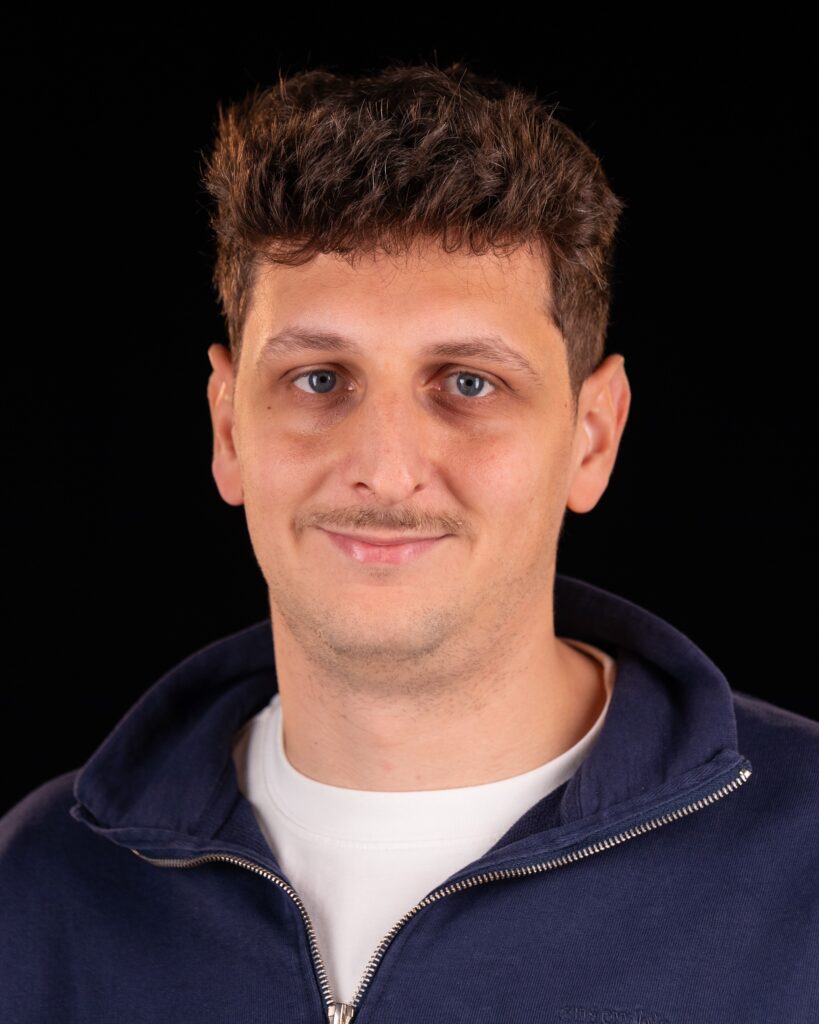
Maxime Di Folco
Assistant Professor at Télécom Paris,
Institut Polytechnique de Paris
Maxime Di Folco is an Assistant Professor (Maître de conférences) at Télécom Paris (Institut Polytechnique de Paris), working on multimodal artificial intelligence for robust clinical decision support. His research focuses on the integration of medical imaging and clinical data, with applications in cardiology and breast cancer, aiming to improve the reliability, generalisability, and fairness of AI-based clinical models. Prior to this position, he was a postdoctoral researcher in cardiac imaging at Helmholtz Munich and the Technical University of Munich, in the group of Prof. Julia Schnabel. His work centred on representation learning for cardiac imaging and multimodal data. He completed his PhD in Lyon under the supervision of Nicolas Duchateau and Patrick Clarysse, where he investigated manifold learning approaches to model and analyse the cardiac function.
Persolnal Website : https://compai-lab.github.io/author/maxime-di-folco/
Abstract : Clinical decision support utilising multimodal AI has advanced significantly in recent years and is now recognised as a high-potential diagnostic, evaluative, and predictive tool in modern healthcare. However, seamlessly combining diverse modalities such as medical imaging and clinical data remains highly challenging due to the severe heterogeneity of these data. In this talk, I will present recent multimodal AI approaches applied to cardiovascular diseases, demonstrating how addressing these specific methodological challenges enables us to challenge established clinical baselines and drive better decision-making for patients.

Jérôme Lang
Director of research at CNRS,
Director of LAMSADE
Jérôme Lang is key figure in AI research as a CNRS research director and the director of LAMSADE at PSL, Université Paris-Dauphine. His research spans across (but is certainly not limited to) computational social choice, knowledge representation, and preference representation—fields he did not just contribute to, but significantly shaped. He was the program chair of IJCAI-ECAI 2018. He is a EurAI Fellow (2009) as well as a laureate for the CNRS silver medal (2017) and one the Humbolt Research Award (2021) winners. Recently, previous collaborators collected his contributions at the interface of economic theory with artificial intelligence.
Persolnal Website : https://www.lamsade.dauphine.fr/%7Elang/Jerome-french.html
Abstract : AI, computational social choice, and democracy: ten little talks (a tribute to Agatha Christie)
Computational social choice is a research field at the intersection of artificial intelligence, theoretical computer science and economics. It consists of analysing problems arising from the aggregation of preferences of a group of agents from a computational perspective. Some of its subfields are various forms of voting, public decision making (e.g., participatory budgeting), fair division of resources, and matching with preferences (e.g., university-student matching). The interplay of computer science (and especially AI) and social choice has not only lead to developing algorithms for collective decision making: it has helped reshaping and revitalising the field, by identifying new paradigms, new problems, new objects of study. I will briefly present the field and then I will give some examples of such new paradigms, problems, or objects of study. The ten little talks mentioned in the title refer to potential talks: I will (obviously!) talk about less than ten topics, but these will be selected out of ten candidates by the attendance through a vote.
François Charton
Research Engineer at Axiom Math
François Charton is a Research Engineer, one of the first employees at Axiom Math, researching the use of language models in mathematics and theoretical physics. He established himself as a specialist in AI applied to mathematics during his time at Facebook AI Research and continues to do so at Axiom Math. He frequently gives talks at Collège de France and prestigious universities and publishes at top-tier venues. Axiom Math is a startup that focuses on solving math’s hardest problems using AI and formalization tools they build.
Persolnal Website : https://f-charton.github.io/about/
Company Website : https://axiommath.ai/

Sponsors
We are supported by :